Showing posts with label mini mash. Show all posts

Sunday, June 7, 2015

Saturday Brew Session Champagne Lager and a Cascadian IPA

 Your brew day should always begin with a clean kitchen.  There are no exceptions to this rule.  If you want SWMBO to appreciate your brewing hobby, it begins and ends with cleaning the kitchen.  After a crazy Friday night our kitchen was a disaster, if you look closely you can see half of a 6 of Genesee Cream to the right of the stove.  The pink pitcher,  is my one gallon brewing pitcher.
 I have some fining and bottling to do today to, it is going to be a very long home brew hobby day. (In fact is was a long day.  Started cleaning at 8 am finished cleaning at 8 pm.  But took a break for a 2 hour movie in there, and a trip to the LHBS.  But I walked away with 6 gallons of great beer,  I bottled 5 gallons, I fined 10 gallons.) You know you're a home brewer when... You have empty glass carboys in your breakfast room, and a bucket of sanitizer...
 I always organize and then re organize my stuff.   I keep a brew log and check off my boxes. I find that when I don't follow my brew log... I screw up.  Even after 20+ years.   Our hobby has lots of little details that make big differences.  You can't screw them up if you want to make truly excellent beer.   As you can see this is  a partial mash batch.
 Headed to strike temperature,  My brewery was suddenly invaded by hobbits.  "hobbits my precious...what are hobittses? filthy breakfast making dont clean up after themselves little creatures ...Hobbitses ar our friends.... not on brew day."  What are they doing up early?  They're never up before noon.  There must be some dumb "one direction" special on Nickelodeon.   Oh no maybe that one guy got a hair cut...

 Warming on the stove are my DME pot and my rinse sparge pot.   When I do large batches it is almost always partial mash.  5.5 Gallons is large for me.  So I add the DME with a whisk to a pot that I can gently heat.  I don't add the DME until after the mash.  You have to calculate your mash water correctly, and to do that you need to see how much water the grain absorbed.  The other pot is heating to 168 for rinsing the grains. A very easy repeatable way to make good beer.


After dough in, pretty much spot on.  I was at 153, but 5 ice cubes solved that.   "Listen to me young padawan... If can mash at correct temp good beer will you have... if too HIGH VERY BAD."  You can accidentally "fix" the fermentability of your wort. Not fix as in repair, fix as in affix, fasten, glue... Your best strategy is to dough in low around 135 F for a protein rest and rise to your mash temperature.  Multi step mashing is a key to excellent beer. Doughing in low cant hurt anything, doughing in TOO HIGH, can ruin a batch.  And btw, when did it become a big deal to nail your saccrification rest temp? No Belgian brewer ever tweeted about nailing his strike temp. How dumb is that, just add a protein rest.  It improves your beer, and eliminates the risk of overshooting strike temperatures.

 These warriors are ready for service.  California Lager Yeast.  A lager yeast that thrives at ale temperatures.  And you can make just about any full bodied lager with it.  I'm not kidding on this one, it makes great lawn mower lager, great steam beer, great bock, and great Oktoberfest.  Give it a try if you are an ale brewer.

The boil. Nothing too exciting here, as you can tell from the leavings on the side of the pot, I had a near boil over.  So yeah, clean up sucked.
Chilling on the patio.  Large batches get chilled on the patio.   Need the full power of the garden hose to cool them faster.  They still take 25 -30 minutes.  I hate that water waste, so I have to improve my immersion chiller in the near future.  I may just buy a Jaded chiller. http://jadedbrewing.com/. Or I may turn mine into a double coil, I haven't decided yet.
 I like to use my grains again for a second 1 gallon batch.  Here you see the one gallon fermenter the cascade hops, the S04, and the strike water coming up to temp.  There have been many days where the 1 gallon batch was the better of the two batches.  In this case the grains and a pound of DME were turned into a pretty big cascade hopped APA.  1.068 OG.   .4 oz at 60, .3 at 15, .3 at flame out.  It will have .125 of cascade, and .125 of centennial for dry hopping.   It should be a tongue stinger.  It's kinda for a friend at church who loves the big APAs and IPAs.

I suggest that if you are a partial mash or small batch all grain brewer you should almost always do a partiguyle batch when you brew.  Its fun, easy, and only adds about an hour to your brew day.
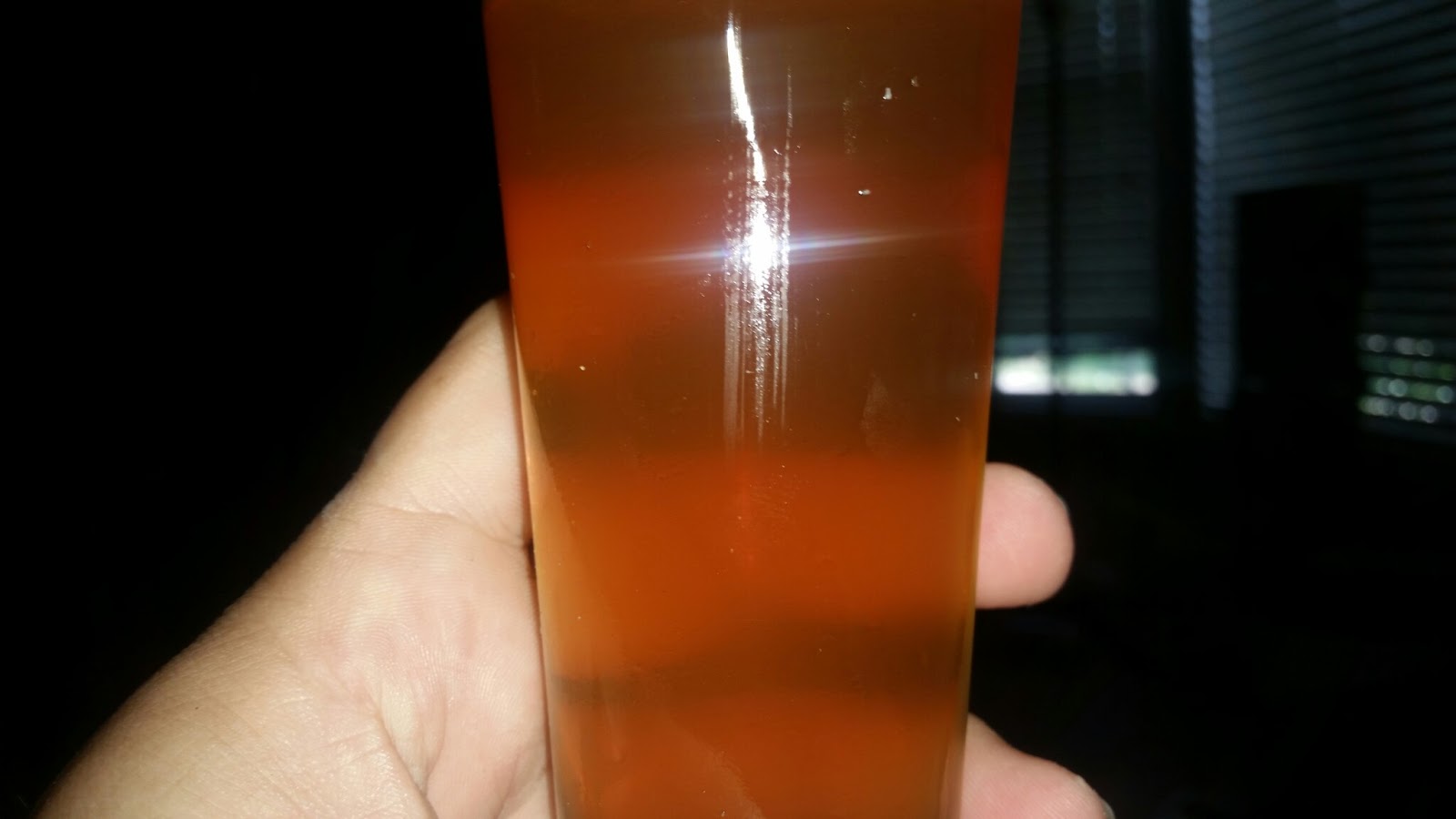
Here is the carbonated and pretty clear result of the partial mash "every day pale ale" from a couple of weeks ago.  It is dang good.

Wednesday, June 3, 2015

The New Rules for Me...Common Sense Home Brewing

As home brewer's we all have a tendency to want... to want a better set up, to want more equipment, to want cheaper prices, to want the perfect recipe.   I am no different, but what I want... to consistently make excellent (near competition quality) beer with my current set up.  To that end I have developed some rules for my self.  By following these rules I avoid wandering all over the fertile landscape of home brewing.   These rules are my road map.   I'm sure you have all been tempted to try many different methods, recipes, and techniques.  By having rules, you can try different things in a way that you know, that you have proven will work for you.

Image result for follow the rulesSo with out further adieu, I present my common sense rules for making excellent beer.  The first rule is of course have fun.

  1. .
  2. It's about the skill of the brewer.
    1. It's not the equipment
    2. It's not the recipe
    3. It is about the skill of the brewer
      1. The cleanliness of the brewer
      2. The sanitation of the brewer
      3. The organization of the brewer
      4. The subtle tricks, nuances and processes picked up through experience... and failure
  3. There is no substitute for Sanitation. 
    1. Clean everything. 
    2. Sanitize everything.
  4. Know your equipment, and it's limitations
    1. Stick with your process
    2. Do not change from 3 vessel, to BIAB, to Partial Mash, to No Boil constantly.  
    3. Find your process and stick with it. 
      1. For me that process is Partial Mash.
        1. I don't do all grain 5 gallon batches
        2. I don't do purely BIAB, although I use a bag.
        3. I don't do purely extract
  5. Proven Recipes tend to work well.
    1. Proven means vetted out, tested, published in a reputable journal of home brewing.  BYO or ZYMURGY
      1. Get BYO Here
    2. Proven means recipes from sources you KNOW and trust.
      1. It may mean a recipe off of Beer Smith, or BrewToad, or Brewer'sfriend, if you know the brewer and their quality.
        1. Be careful with online recipes... I saw a so called partial mash "stout" recipe that had 4 lbs of chocolate malt in it. and 9.9 lbs of LME... uh... well... no... hard pass sir.
  6. There is no substitute for Sanitation.  YES I'M REPEATING MYSELF
    1. Clean everything. 
    2. Sanitize everything. 
  7. Record everything
    1. Have a brewing log for every batch.  Record Everything that happened while you were brewing.
      1. Successes
      2. Failures
  8. LEARN, LEARN, LEARN
    1. I've been brewing for 24 years, and I still learn all the time.
    2. I'm currently re reading "How to brew" by John Palmer. This time I'm reading it with a note book, studying everything.  
      1. get the book here
    3. Next up "Principles of Brewing Science" by George Fixx.
      1. a very technical book for more advanced brewers
      2. Get Principles of Brewing Science Here... but have your learning cap on.
What are your rules for home brew success?


Thursday, April 23, 2015

Another Cajun Injector.


Image result for cajun injector electric turkey fryerMy Brew partner is a great guy, a fantastic father, and well... he treats my sister like a man should treat his wife... with respect and honor.   Many of you have read my thread about the Cajun Injector Electric Turkey Fryer. He procured one after we researched various brewing equipment, and we decided this was the way to go.   And it has worked so well that I used contest winnings to get another one.   We are not paid spokes people for Cajun Injector.   We get no products or equipment from them. (although I will admit we are shamelessly willing to accept said products and equipment ) So this endorsement is purely based on our experience with the product.  If you are an extract brewer, a partial masher, or a BIAB brewer, you should consider this set up.   
Now that we have 2 of them, any recipe, and any process is available to us.   Even All grain, 90 minute boil with a large volume of starting wort.  So if we ever feel the need to brew up 5-10 gallons of all grain and spend 6 hours doing it... we can.
 Things you should know about the Cajun Injector.

  • It's affordable - about $100.00
  • It can handle any 5 gallon extract batch
  • It can handle any BIAB or Partial Mash batch with up to about 12 lbs of grain.  
    • We don't exceed 10-11 lbs of grain, but we are continual mash stir guys (every 5-10 minutes).  So we are concerned about splashing grains out of the bag.
    • Removing the lid is no big deal during the mash, because the unit will maintain the heat. 
  • It can and does boil 6.5 gallons of water.
    • It doesn't heat super fast so it is a good idea to do a near boiling water addition.
    • Some of you may have read on homebrewtalk that this is not the case... to that I say, remember our hobby is filled with good guys who love brewing, and who love the fact that they have learned to brew a certain way. Some of these good people believe that the way they have learned to brew is THE way to brew.  Since I started in this hobby there have been many guys who just don't want to see any change.  Unless that change is more expensive and more complicated.   
So, if you are interested in upping your game, but still being able to brew inside the house... the Cajun Injector Electric Turkey Fryer may be the best rig for you. 

Tell me what you think.  

Tuesday, April 21, 2015

Advances in Partial Mash

Today, I thought I would get into some of the great advances we have seen in home brewing and specifically in Partial Mash Brewing over the past 20 or so years. For me, and maybe for you, these advances make partial mash brewing even easier, and even more fun.

When we started brewing, things were very different.  It wasn't quite the dark ages of home brewing but it was close.  Home brewers were largely divided into two camps.  I know what you're thinking I'm going to say here... Extract and All grain... right?  come on you know you were thinking it.   But really the division was more like guys who had big propane burners and brewed outside (or garage) and guys who brewed on their stove tops.   The guys who brewed on propane, tended toward all grain, because... well because they could.  And they weren't wrong when they said their beer was superior, as I discussed in earlier blog posts, extract leaved a lot to be desired back in those days.  
So if you could brew outside, and use all grain, well why not.   Especially if you already owned a turkey fryer.   Everything changed in the mid 1990s when we started hearing about Partial Mash.  Getting a portion of your sugar from a temperature controlled grain mashing, and the balance from extract. Extract has come a long way since the dark ages.  The first advancement in partial mash,  Better Extract.  You can actually make great beer from extract now.  But you are limited to the extracts that are manufactured. That is another huge advantage of partial mash.

Back then we were mashing in a mash pot, or in a cooler (I still do sometimes) and then transferring the wort to the boil kettle.  Some of us would use our boil kettle for the mash, then use a lauter tun made of 2 pvc buckets to separate the grains (think mine is somewhere in the garage...It may have Christmas lights in it right now).  Others would pour the wort and grains through a strainer. That All changed when the Aussies thought of BIAB.  You could now perform your partial mash in your brew kettle and just remove the grains by lifting the bag.   Brilliant! And by far the easiest way to BIAB.

Image result for home brew newsletterIn the dark ages our recipes came from newsletters, friends, and Magazines.  Changing a recipe had no predictable results.  You did the math... it seemed ok... you brewed the beer.  You tasted it.   If it was good you did it again.  But if it was lacking, you were doomed to try again.  In truth it was kinda fun.  But not nearly as fun as using software to create a brew before you brew it.   The advances made in brewing software are critical to partial mash.  There was a time when partial mash consisted of mashing 4 lbs of grain... no more.   just 4 lbs.  That was because 4 lbs of grain would give you roughly the same fermentable sugars as 3.3 lbs of LME.  It kept the recipes simple.  But with the advances in software we don't need to think that way any longer.  I have partial mash recipes (again posted at BrewToad) that are 75% grain.  The DME is really just there to add sugars and increase the OG.  With software you can really custom design a partial mash recipe.

One of the advantages of partial mash today, as opposed to years ago... full volume boil.  When we started brewing Turkey Fryers (even propane) were expensive.  And you probably had to get them at Bass Pro, or a similar out door store.  But as they grew in popularity, the price came down.  Now the options available to a home brewer are almost baffling.  I have, and I know you all have done this too, spent countless hours online trying to decide how to invest my limited brewing equipment funds. You can spend as much as you want to spend.  But you can also brew great beer right on your stove top, even if you don't own a high powered gas stove by using the texas two step.  Just create your wort, and boil it in two pots.  Your wort doesn't know where it is being boiled.   There are many posts about this topic online, but I will lend one or two pieces of advice,  just divide it in half.   It makes all of your math so much easier.  Your only boiling 6.5 gallons of wort, and I am here to tell you, any stove can handle this in two pots.

You don't have to wait till you can afford expensive equipment to brew great beer.  If you have a couple of pots, a brew bag,  a thermometer, and a couple of brew buckets, you're ready to step up to partial mash.  And if you're like me, you may not choose to step to BIAB or All Grain very often after you try partial mash.


Got any recipe you want me to convert?  Let me know... I'll be happy to help